

 Managed IT Services
You walk into the office Monday morning, coffee in hand, and your inbox is already a mess. One employee can’t log in. Another says their personal information turned up somewhere it shouldn’t be. Just like that, your to-do list gets replaced by one urgent question: what went wrong?

For a lot of small businesses, that’s exactly how a data breach starts to feel real. It’s not a technical headache so much as a legal, financial, and reputational one. IBM’s 2026 Cost of a Data Breach Report puts the global average at $4.99 million, up 12% in a year, with the U.S. average at $11.5 million — more than double any other country.
The number that should worry a small business owner more is the clock. Breaches now take an average of 247 days to identify and contain, the first increase after five straight years of improvement. That is eight months of someone else having your client list. Small business data compliance is what shortens that clock, and in 2026 it is a survival skill rather than a paperwork exercise.
Why Small Business Data Compliance Matters More Than Ever
The last few years have made one thing painfully clear: small businesses are squarely on attackers’ radar. You’re an easier target than a Fortune 500 company, and you often don’t have the same defenses in place. That doesn’t mean you get hit less often — it means the damage cuts deeper when you do.
Regulators have noticed too. Twenty states now have comprehensive privacy laws in effect, including New Jersey, and the Attorney General here stopped handing out automatic second chances in July 2026. Over in Europe, GDPR keeps reaching across borders, holding non-EU companies accountable when they process EU residents’ data. Fines run up to 4% of annual global turnover or €20 million, whichever is higher.
Falling short on small business data compliance costs you more than money. It can:
- Shake client confidence for years
- Stall operations while systems come back online
- Invite legal claims from affected individuals
- Sink a cyber insurance renewal, or spike the premium
- Spark negative coverage that lingers in search results long after the breach is fixed
So yes, compliance helps you avoid penalties. Just as importantly, it protects the trust you’ve spent years building with your clients.
Which Rules Actually Apply to Your Business?
Before you can follow the rules, you need to know which ones reach you. Most small firms serve clients across state lines, which means more than one regime can apply at the same time. This table is the short version of what small business data compliance looks like in 2026.
| Rule | Who it reaches | What it asks for |
|---|---|---|
| New Jersey Data Privacy Act | 100,000+ NJ consumers, or 25,000+ if you make any revenue from selling data | Consumer rights, honoring browser opt-out signals, data protection assessments |
| GDPR | Anyone processing EU residents’ data | Lawful basis, retention limits, deletion and access rights |
| CCPA and the 2026 California rules | $25M+ revenue, or large volumes of California data | Notice, deletion, opt-out, and now documented privacy risk assessments |
| FTC Safeguards Rule | Non-banking financial businesses: accountants, tax preparers, advisors, lenders | A written security program and 30-day breach reporting to the FTC |
| HIPAA | Healthcare providers and their business associates | Risk analysis, safeguards, breach notification |
| PCI DSS | Anyone who takes card payments | Contractual security controls set by the card brands |
The Regulations Behind Small Business Data Compliance in 2026
The New Jersey Data Privacy Act Is Now Fully Enforceable
This is the one closest to home, and the one most New Jersey owners still haven’t read. The NJDPA took effect January 15, 2025, and for its first eighteen months the Division of Consumer Affairs had to offer a cure period — a chance to fix a violation before any penalty. That cure period ended July 1, 2026. Enforcement can now go straight to a fine.
It reaches you if you process the personal data of 100,000 or more New Jersey consumers, or 25,000 or more while deriving any revenue at all from selling data. Note what’s missing: unlike most states, New Jersey sets no minimum revenue floor. Penalties run $10,000 for a first violation and $20,000 for each one after.
One requirement catches small websites out repeatedly. New Jersey is among the states that require you to honor universal opt-out signals such as Global Privacy Control — if a visitor’s browser sends that signal, your site has to respect it automatically, whether or not anyone clicks anything. Our guide to which NJ regulations apply to your business walks through the rest.
General Data Protection Regulation (GDPR)
GDPR applies to any business anywhere that handles data from EU residents. It requires clear permission to collect data, limits on how long you keep it, real protection while you hold it, and the right for people to see or delete what you have. A single EU client is enough to pull you in.
California Consumer Privacy Act — and the 2026 Rules Behind It
CCPA gives Californians the right to know what you collect, ask for deletion, and opt out of sale. It applies at $25 million in revenue or at large volumes of California data. What changed for 2026 is underneath it: California finalized rules requiring documented privacy risk assessments for higher-risk processing starting January 1, 2026, with rules for automated decision-making technology following January 1, 2027 and phased cybersecurity audits beginning in 2028.
Most New Jersey small businesses fall under the thresholds. The reason to watch California anyway is that its rules tend to become everyone else’s two years later.
The 2026 State Privacy Patchwork
Twenty states have comprehensive privacy laws in effect this year, with Indiana, Kentucky and Rhode Island joining on January 1, 2026. Consumer rights vary in the details, but the core set has settled: access, correction, deletion, portability, and opting out of targeted advertising and data sales. Small business data compliance is now a multi-state problem even for a firm with one office.
For a small business the practical takeaway isn’t to memorize twenty statutes. It’s that your client list probably spans several of them, and that building to the strictest one you touch is cheaper than maintaining different rules per state.
The Industry Rules That Catch Small Businesses Off Guard
Plenty of firms that think they’re too small for privacy law are already covered by something narrower and older:
- FTC Safeguards Rule — if you’re an accountant, tax preparer, financial advisor, or lender, you need a written information security program, and since May 2024 you must report a breach affecting 500 or more consumers to the FTC within 30 days. Our FTC Safeguards compliance page covers the specifics, and a written information security plan is the document that satisfies it.
- HIPAA — medical and dental practices and their vendors. The long-awaited Security Rule overhaul, which would make multifactor authentication, encryption, and an asset inventory explicit requirements, has been pushed to July 2027. The current rule still applies in full, and HIPAA compliance consulting is where most practices start.
- IRS Publication 4557 — every paid tax preparer, regardless of size.
- PCI DSS — anyone accepting card payments, enforced by contract rather than statute.
Small business data compliance usually means satisfying two or three of these at once. The good news is that they overlap heavily: the controls that satisfy the FTC generally satisfy New Jersey too.
6 Small Business Data Compliance Best Practices
This is where theory meets your Tuesday afternoon. These six steps make small business data compliance manageable and keep you from scrambling later.
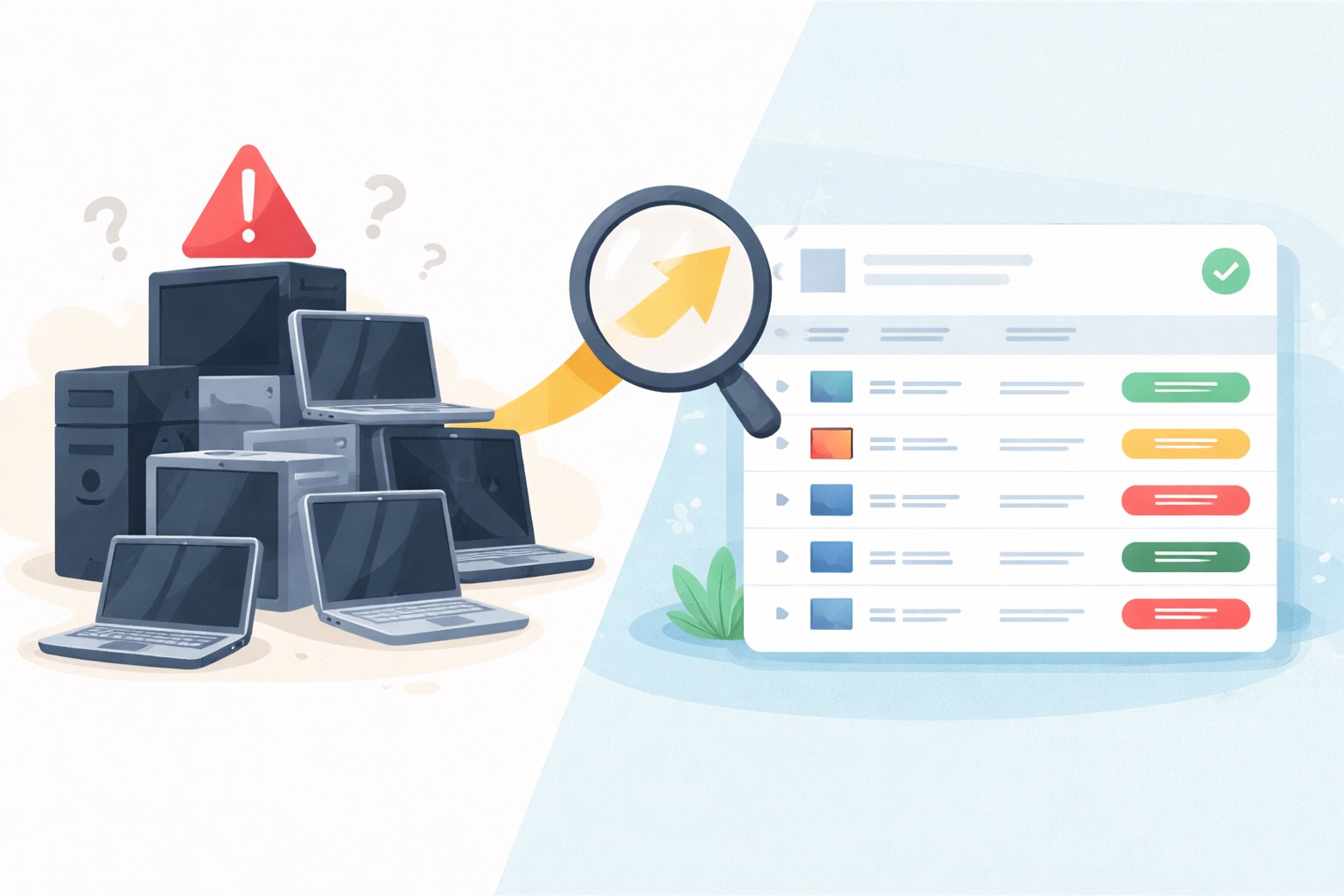
1. Map Your Data
You can’t protect what you can’t find. Take inventory of every type of personal data you hold, where it lives, who can reach it, and how it’s used. Don’t skip the awkward places — old backups, employee laptops, the shared drive nobody has opened since 2019, and third-party systems that quietly hold copies.
2. Limit What You Keep
If you don’t truly need a piece of information, don’t collect it. If you do need it, keep it only as long as necessary and restrict access to the people whose roles require it. That’s the principle of least privilege, and it is the cheapest small business data compliance control there is — it shrinks the blast radius of every future incident.
3. Build a Real Data Protection Policy
Put the rules in writing. Spell out how data is classified, stored, backed up, and destroyed when its time is up. Include breach response steps and specific requirements for devices and networks. If a regulator ever asks what your small business data compliance program is, this document is the answer.
4. Train Your Team Continuously
Phishing is still the most common way in, according to IBM’s 2026 figures. Teach your staff to spot a suspicious message, use secure file sharing, and build strong, unique passwords. Make refresher training a calendar item rather than an afterthought — and test with simulations, because the results tell you more than attendance sheets do.

5. Encrypt Data in Transit and at Rest
Use TLS on your website, secure remote access for anyone working off-site, and encryption for stored files — especially on laptops and portable drives. Verify that your cloud providers meet recognized standards, and turn on multifactor authentication everywhere it’s offered. Encryption does double duty for small business data compliance: data that walks out the door encrypted is often not a reportable breach at all.
6. Don’t Overlook Physical Security
Lock the server room. Secure portable devices. Shred paper records rather than binning them. If it can walk out the door, it should be encrypted before it does.
Breach Response Essentials for Small Business Data Compliance
Even with strong defenses, things go wrong. When they do, speed matters more than polish. Bring your attorney, your IT security team, a forensic expert, and whoever handles communications into the same conversation immediately. Isolate affected systems, revoke stolen credentials, and stop the bleeding before you start the analysis.
Once things are stable, establish what happened and how much was touched. Keep detailed, timestamped notes — they matter for regulators, for your insurer, and for preventing a repeat. Documentation is where small business data compliance is won or lost after an incident.
Then watch the clocks, because 2026 has several running at once. New Jersey requires notification to affected residents and the State Police without unreasonable delay. The FTC gives non-banking financial businesses 30 days for breaches affecting 500 or more people. HIPAA sets 60 days. Contracts with your own clients often set something shorter than all of them. Knowing which clock you’re on before an incident is half of what small business data compliance buys you.
Finally, use it. Patch the weak points, update the policy, and tell your team what changed. A breach is expensive either way; it’s only wasted if nothing changes afterward, which is why every small business data compliance program should end with a review step. Our walkthrough of what to do in case of a cyberattack lays out the first 24 hours step by step.
Turn Small Business Data Compliance Into a Competitive Advantage
Data regulations feel like a moving target because they are one. They’re also an opportunity. Showing clients that you take their privacy seriously separates you from competitors treating compliance as a box-ticking exercise — and increasingly, it’s how you win the business in the first place.
Enterprise clients now send small business data compliance questionnaires to vendors a tenth their size. Cyber insurers ask the same questions at renewal. Answering them well is a sales advantage; answering them badly costs you the contract, the coverage, or both.
You don’t need perfect security. Nobody has that. What you need is a culture that values data, policies that are more than paper, and a habit of verifying that what you think is happening with your data actually is. That’s how small business data compliance turns into credibility with the people who trust you. A security risk assessment is the usual place to find out which of the three you’re missing.
Frequently Asked Questions About Small Business Data Compliance
Do small businesses really need to worry about GDPR and CCPA?
Yes. Small business data compliance isn’t just for big companies. If you handle data from even a handful of EU residents, GDPR can apply, and CCPA can reach you at certain revenue or data-volume thresholds. It’s worth checking which laws touch your business specifically rather than assuming you’re too small to matter.
Does the New Jersey Data Privacy Act apply to my small business?
It depends on volume, not revenue — which surprises most owners who assume small business data compliance rules start at a dollar figure. The NJDPA reaches controllers handling personal data of 100,000 or more New Jersey consumers, or 25,000 or more if you derive any revenue from selling data. Many small firms fall under those thresholds — but plenty of e-commerce sites, marketing agencies and healthcare practices are closer than they expect.
What happens now that New Jersey’s cure period has ended?
Before July 1, 2026, the Division of Consumer Affairs had to give you a chance to fix a violation first. That guarantee is gone. The Attorney General can now proceed straight to enforcement, at $10,000 for a first violation and $20,000 for each one after.
How often should we review our data compliance practices?
At least once a year, and any time you add tools, vendors, or new types of data. Regulations change often, so an annual review paired with ongoing staff training keeps your small business data compliance program current instead of quietly outdated.
What does a data breach actually cost a small business?
IBM puts the 2026 U.S. average at $11.5 million, but that figure is skewed by large enterprises. For a small firm the more useful way to think about small business data compliance failures is downtime, client attrition, legal fees, and the cost of notifying everyone affected — which for a professional practice routinely runs into six figures before anyone pays a fine.
Can we handle small business data compliance without hiring a compliance officer?
Most small firms do. What they don’t do is handle it without a written program, someone accountable for it, and a technology partner who can prove the controls are actually running. In small business data compliance the documentation is usually the gap, not the technology.
Where do we start if we’ve never done any of this?
Start with data mapping — you cannot write a sensible policy about data you haven’t located. From there, work through the checklist above in order. A cybersecurity assessment compresses the first few steps into a couple of weeks if you’d rather not do it alone.
Your First 90 Days: A Practical Small Business Data Compliance Plan
If the list above feels like a lot, sequence it. This is the small business data compliance order we work through with New Jersey clients starting from nothing:
- Days 1–30: find the data. Inventory what you hold and where, including cloud apps and vendor systems. Identify which rules reach you based on what you found.
- Days 31–60: write it down. Draft the security program, retention schedule, and breach response plan. Assign a named owner. Fix the obvious gaps — multifactor authentication, encrypted laptops, unsupported software.
- Days 61–90: prove it. Train the team, run a phishing simulation, test a restore from backup, and review vendor contracts for security and notification terms.
- Ongoing: review quarterly. New tools and new vendors change your exposure faster than the laws do.
Ninety days is enough to take small business data compliance from exposed to defensible. It is not enough to become perfect, and no regulator expects perfect — they expect a documented, reasonable program that someone is actually running.
Take Action: Protect Your Business Today
Don’t wait for a breach to find out where your gaps are. Schedule a free consultation with eMDTec, or give us a call, and let’s build a small business data compliance plan that works for how your firm actually operates.