

 Managed IT Services

There’s nothing worse than walking into a new job and spending the first day filling out forms, asking where the bathroom is, and staring at a screen that still doesn’t have your login credentials. That’s what broken new hire onboarding looks like, and it’s not the welcome anyone hopes for.
According to Gallup, only 12% of employees strongly feel their company does an excellent job of onboarding. With the right IT in place, a chaotic first day becomes a smooth, professional experience for both the new hire and your HR team.
Why New Hire Onboarding Matters
The first 90 days of any job are critical. According to SHRM, nearly 1 in 3 employees who quit within their first six months said they received little to no onboarding, and 15% specifically cited poor onboarding as a reason for leaving. Weak onboarding isn’t just a talent issue — it’s a cost issue, since replacing an employee can run well beyond their annual salary once recruiting and lost productivity are factored in.
The Problem with Traditional New Hire Onboarding
Traditional onboarding usually means a stack of paper forms, a scavenger hunt for the right login credentials, and a first week spent waiting on IT tickets instead of doing real work. It’s slow for the employee and even slower for the HR and IT staff manually provisioning every account by hand.
How IT Streamlines New Hire Onboarding
1. Start Before Day One
- Welcome videos or messages from leadership
- Digital forms completed and submitted online
- A clear first-day schedule
- Chat invites to meet the team
This gets the administrative work out of the way so a new hire can hit the ground running on day one instead of buried in paperwork.
2. Automate the Repetitive Parts
IT can automate data entry into HR systems, background checks, compliance training assignments, and reminder emails for pending tasks. That frees up HR to actually connect with new hires instead of chasing paperwork.
3. Make Training Interactive
Modern learning platforms replace dull training binders with videos, quizzes, simulations, and role-specific content, so a marketing hire and a software engineer aren’t sitting through the same generic training.
4. Create One Central Hub
A single portal for policies, benefits, org charts, and IT resources means new hires stop hunting through email threads for answers, and stop pinging their manager with questions IT already documented.

5. Use Analytics to Improve Over Time
Tracking where new hires get stuck, which trainings take longest, and where questions pile up gives HR real data to improve onboarding instead of guessing what to fix next.
Personalizing New Hire Onboarding for Every Role
Good onboarding isn’t one-size-fits-all. A sales hire needs CRM access and territory information on day one; a developer needs repo access and environment setup. IT-driven onboarding workflows can branch by role automatically, so every new hire gets exactly what they need without a manual checklist for every department.
The Manager’s Role in New Hire Onboarding
Even the best onboarding technology doesn’t replace a manager checking in. IT can hand a new hire working credentials and a tidy first-day schedule, but a manager still needs to set expectations, introduce the team, and follow up in week two and week four. Pairing strong onboarding with equally strong ongoing support is what actually keeps people around past the first few months.

New Hire Onboarding Mistakes to Avoid
- Provisioning accounts with more access than the role actually needs, then forgetting to scale it back
- Treating onboarding as an HR-only process instead of a joint HR and IT effort
- Skipping a clear plan for contractors and temporary staff who need the same secure setup as full-time hires
- Never revisiting the offboarding side of the process once someone leaves
Contractor and temporary access deserves its own plan — see our guide on granting and revoking contractor access in under an hour. And since onboarding has a mirror image, our piece on proper employee offboarding covers what to lock down when someone leaves.
IT Is the Secret to Better New Hire Onboarding
Schedule a Free Consultation — Call 973-295-5570
A Day-One New Hire Onboarding Checklist for IT
Everything in this article comes down to a short list that IT should complete before a new employee’s first morning. We use this new hire onboarding checklist with New Jersey clients, and it is the difference between a productive first day and a week of waiting.
- Accounts created from the role template: email, Microsoft 365 license, Teams, the line-of-business application, and any vendor portals, with group memberships that match the role.
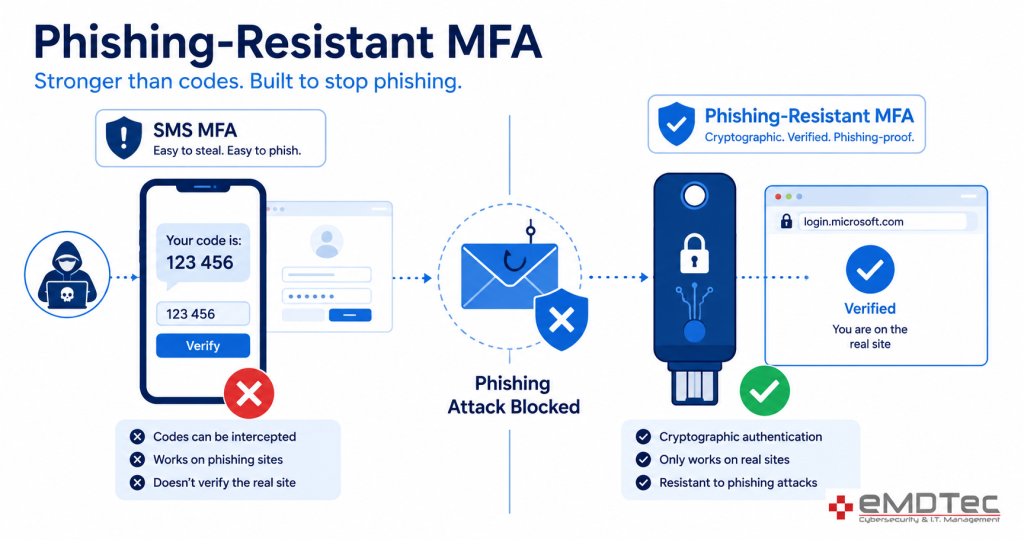
- Multifactor authentication registered with the employee before day one, ideally with a passkey or authenticator app rather than text codes, so the first sign-in is secure and smooth.
- Device enrolled in management, encrypted, patched, loaded with the standard applications, and shipped or placed on the desk with a one-page getting-started sheet.
- Access to shared mailboxes, SharePoint sites, and Teams channels granted, and a welcome message posted so the team knows who is starting.
- Security awareness training assigned and scheduled for the first week, with the acceptable use policy signed during new hire onboarding rather than months later.
- A documented record of every account, device, and access grant, which becomes the offboarding checklist when the employee eventually leaves.
For businesses that hire in bursts, such as seasonal tax work or a new practice location, the same new hire onboarding checklist scales without extra IT effort, because the role templates and the device build are already defined. That is the real return on treating new hire onboarding as a process rather than a favor the IT person does each time.
Good new hire onboarding is quiet. The employee arrives, signs in, and gets to work. Behind that quiet is a repeatable process that IT runs the same way every time, and it is one of the highest-return investments a growing business can make in both productivity and security.
Featured Image Credit: Pexels
Republished with Permission from The Technology Press.